LAMENESSES.
CANKER
Is a constitutional disease of the feet, and is due to a
habit of body or grossness of constitution, as exhibited
by thick, round legs, large feet, and the lymphatic tem
perament. It usually begins in the frog, but it may be
gin in any other part of the plantar surface. It much
resembles grease of the leg, and often coexists with it.
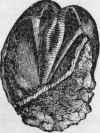
There is an abundant, fetid, colorless discharge from the
frog, which is large, spongy, and covered by pallid, stringy
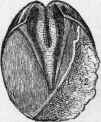 Fig. 72. Worst stage of Canker. Fig. 73. Improvement in Canker.
prominences of a fungoid nature, intermixed with an of
fensive smelling, semi-dried, cheesy matter, composed of
imperfect horn cells. The sound feet of a horse predis
posed to canker very often have an abominable smell, as
if the animal suffered from a “ sulphureted hydrogen
diathesis.” (Williams.)
Remedy.—Remove all superfluous horn and fungous
growths. Dress with silver nitrate, chromic acid, zinc
196 THE DISEASES OF THE HORSE.
chloride solution, or sulphuric acid and tar. In persist
ent cases caustics and astringents must be changed fre
quently. Tonics and salines. Liberal diet. Cleanliness.
Pressure to fetlock for bleeding. Pack with dry tow;
bandage ; protect with leather boot. For doses, see pages
13 to 29.
THRUSH
Is a fetid discharge from the frog. The cleft is usually
first affected. If neglected the disease spreads over the
whole organ, the horn becoming detatched from the bulbs
of the heels to the toe of the frog. The cause is usually
filth, but the disease may originate in frostbite, grease,
swelled legs, &c.
Thrush differs from canker in the nature of the dis
eased secretion, and also in its course and tractability.
Remedy.—Cleanliness. A leather sole may be placed
within the shoe. Dust with calomel. Dress with tar or
wood tar oil. Dose of physic, especially when associated
with constitutional causes. Regulate feeding and work.
Shoe with tips if feet strong and animal works chiefly on
land.
BONE SPAVIN
Is a bony tumor on the inner and lower part of the
hock, arising from inflammation of the cuneiform and
metatarsal bones, terminating usually in stiffness of one
or more of the gliding joints of the hock. It is very
rare on the outer side of the hock.
Spavins arise from causes that are hereditary or consti
tutional and local. The local or exciting causes are sprains
of the ligaments and concussion of the bones. One fer
tile cause is the alteration of the direction of the leg,
induced by the use of high calkined shoes. These high
heels alter the relative position of the limb, from the hip
downward, and cause shocks of concussion at every step.
Remedy.—Rest. Purgative and fomentations where
LAMENESSES.
197
there is much lameness. In young horses hasten the in.
evitable stiffness by a blister, firing, seton, or periosteot-
omy (dividing the periosteum, a very hard, elastic sub
stance next to the bones and roots of the teeth). In old
horses sometimes incurable. The bone softens.
BOG SPAVIN,
When caused by inflammation of the joint, is a tense,
fluctuating swelling, accompanied by heat and pain. This
form constitutes unsoundness. It may be acute or chronic.
In the acute form the lameness is very great, with fever,
loss of condition, and the ability to put the foot to the
ground. It is apt to end in ulceration of the articular
 Fig. 74. Bog Spavin, or distention of the chief synovial membrane of the
hock joint.
cartilage and partial stiffness of the joint. Some bog
spavins, however, are almost harmless, being mere dropsy
of the articulation (synovia for lubricating joints), arising
from some fault of conformation.
Remedy.—Rest ; in severe cases sling. High heeled
shoe. Foment when hot and tender. Cold water and re
frigerants when inflammation abates. Spring truss in
young animals sometimes gives equable pressure. Counter-
irritation encourages absorption. Firing-iron or seton in
chronic cases.
THOROUGH-PIN OF THE HOCK
Is a small, roundish or oval, membranous cavity on the
lower part of the thigh and upper and back part of the
198 THE DISEASES OF THE HORSE.
hock, caused by disease of the tendon of the flexor pedis
perforans muscle, which muscle is inclosed in a synovial
sheath on the inner side of the ‘ os calcis,’ or by dropsy
of the sheath itself, without disease of the tendon. The
fluid which fills it may, by pressure, be forced from one
side to the other. Hence the name thorough-pin (through
and through). This may be described as true thorough-
pin, in contradistinction to that associated with very large
bog spavins. Thorough-pin is peculiar to short, fleshy,
upright hocks.
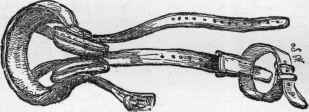 Fig. 75. Spring Truss for Thorough-pin and Bog Spavin.
Remedy.—Rest ; high heeled shoe ; flannel bandages.
Equable pressure from a spring truss. Blister if swelling
persists. Open sac at most dependent part if necessary.
THOROUGH-PIN OF THE KNEE
Consists in swelling of the sheath containing the per-
foratis and perforans tendons, at the back and a little
above the knee joint, and is treated similarly to thorough-
pin of the hock.
SPLINT
Is a bony tumor (exostosis), usually, when on the fore
feet, on the inner surface of the metatarsal or metacar-
pal bones. Splint of the hind feet, however, is usually
on the outer surface of the metatarsal bone. It seldom
causes lameness in the hind feet, and does not always
cause it in the fore,
LAMENESSES.
199
Splint is caused by concussion and hereditary predispo
sition, especially that arising from shape and form of leg.
The effects of concussion may be due to the immature
age of the bone, shape of leg, method of shoeing, or
overwork or speed when young.
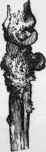
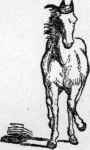 Fig. 76. Splints (fine points of Fig. 77. “Dishing,” while on the
bone). trot, caused by irritation from
fine points of bone.
Remedy.—In slight cases stop fast work. Half dose
physic. Foment and then blister. In severe cases peri-
osteotomy. Pyro-puncture preferable to firing, as it does
not blemish. Mercuric iodide ointment usually reduces
deposit.
STRINGHALT (CHOREA),
Is a spasmodic movement of the muscles of the limbs,
usually the hind.
Incurable. Remove any spavin or other adverse condi
tion. Temporary benefit results from a laxative, a course
of bromides, and moderate work. Stretching and section
of the tibial nerves are of no avail.
Other muscles are subject to spasmodic action, especi
ally those of the spine.
200 THE DISEASES OF THE HORSE.
CURB
Is a sprain or injury of the straight ligament of the
hock, causing enlargement of the joint. It is apt to cause
lameness in young horses, and, when of fresh origin, in
horses of any age. But when of long standing, and merely
the result of former disease, lameness rarely ensues. The
form of hock the reverse of that liable to thorough-pin
is the one predisposed to curb.
 Fig. 78. Curb. Fig. 79. India-rubber bandage for
keeping wet cloths on Curb.
Remedy.—Foment ; lead acetate solution ; refrigerants.
Counter-irritants ; mercuric or iodide ointment ; charges
(plasters). High heeled shoe ; no toe pieces. Rest for
several months, especially in young horses.
CORNS
Are bruises of the secreting sole. They occur almost
invariably on the inside heel of the fore feet, and are
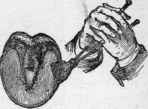
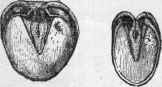 Fig. 80. Old Corn. Fig. 81. New Corn. Fig. 82. Test for Corns.
caused by bad shoeing. They are not horn tumors, but
LAMENESSES. 201
may become such. Sometimes they end in suppuration,
partial necrosis, or bony spiculæ.
Remedy.—Remove shoe, pare to relieve pressure and
insure exit of pus. Poultices soften sole and abate ten
derness. Use light shoe with wide web. Shoe strong feet
with tips.
FOUNDER (LAMINITIS),
Is inflammation of the feet. It is a dreadful disease,
and may be caused by concussion as well as gastric de
rangement (overeating). It is sometimes communicated
to the feet by other diseases, in which case the whole body
is affected, and the mane and tail as well as hoofs are
sometimes shed.
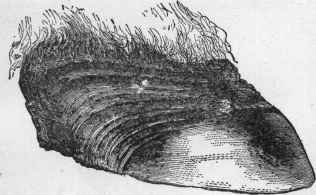 Fig. 83. Founder.
Remedy.—Remove shoes. Thin horn. Bed box with
several inches of chaff or cut straw. Foment or poultice,
hot; cold bran poultice over entire foot sometimes bet
ter than hot. Bleed from jugular or toe if severe, espe
cially if caused by concussion. Repeated small doses of
aconite, niter or other salines for fever. Half close physic
and laxative injections if needed. Vapor bath often ser-
202
THE DISEASES OF THE HORSE.
viceable. When inflammation is subdued, removal of ex-
udate is hastened by cold applications ; later by blisters
to coronet; occasionally by frog setons. Keep heels low,
toes short. Stout, wide-webbed, long-barred shoes.
If convexity and weakness of the sole result (' Pumiced
Foot’), use bar shoe with wide web. Lessen concussion
by tar dressing and leather soles. Stimulate coronet.
For doses, see pages 13 to 29.
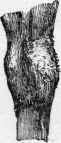
MALLENDERS AND SALLENDERS
Are forms of psoriasis (scaly itch), which see. They
are situated on the flexures of the knee and hock, that
is, mallenders appear on the back of the knee, sallenders
on the front of the hock. At first they are only scurfy
patches, but exhibiting considerable irritability. If neg
lected, they degenerate into troublesome sores, with foul
discharges.
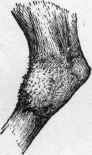 Fig. 84. Mallenders. Fig. 85. Sallenders.
Remedy.—Soft soap and water, mild oils and bran
poultices remove scales. Boro-glycerine or zinc oxide oint
ment. Mercuric nitrate or iodine ointments for thicken
ing and infiltration. Tar oils for chronic cases. Half a
dose of physic ; salines; laxative diet. Iron tonics and
arsenic for feeble. For doses, see pages 13 to 29,
LAMENESSES. 203
RINGBONE
Is a bony tumor or bony deposit around the pastern
joint or coffin joint, or both. It is of two kinds—true
and false. The latter, as a rule, is almost harmless. True
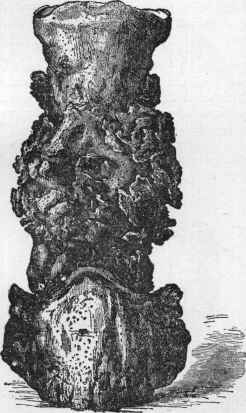 Fig. 86. High Ringbone.
ringbone is of two kinds—high and low. They are not
the cause but the result of disease, especially inflamma
tion of the bones and synovial membranes,
204
THE DISEASES OF THE HORSE.
SIDEBONE
Is ossification of the lateral cartilages of the foot, usu
ally the fore foot. Its causes are hereditary tendency
and shoeing with high calkins.
Remedy.—Bar shoe; cold applications. Rest, blisters,
firing, neurotomy (dissection and also section of a nerve).
SPRAIN OF THE BACK SINEWS
Of the hind legs is common among draft horses, especi
ally those that are worked on hilly roads. The heel is
hightened, and the first remedy is high calkins (Fig. 87).
If the horse is worked, the foot and leg assume the po
sition represented in Fig. 88.
When a horse’s heel hightens, examine the back sinews.
Feel them gently to discover if one place is tenderer,
harder, or even slightly warmer than another. If this
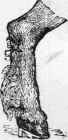 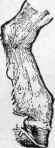 Fig. 87. High calkins for Sprain
of the Back Sinews.
Fig. 88. The result of work
after the sprain.
fails, pinch them hard and run the fingers down them,
marking the part that causes flinching. Healthy tendon
will endure any amount of pressure ; diseased tendon is
acutely sensitive. Cut the hair short and keep the part
constantly damp with a linen bandage. Do not blister,
bleed, seton, or fire. It requires from three to six months
LAMENESSES.
205
to effect a cure. The only remedy for a badly contracted
tendon is its division, but the operation weakens the part.
WINDGALLS
Are soft swellings of the fetlock joints, formerly sup
posed to contain air. They really contain joint oil. They
are sometimes as large as walnuts.
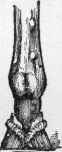 Fig. 89. Windgalls, before dissection. Fig. 90. After dissection.
Remedy.—Equable pressure by flannel or wash leather
bandages. Bandages wetted with white lotion (¾ ounce
of zinc sulphate, 1 ounce lead acetate, in quart of water).
Rest, hand rubbing, blisters. Shoe so as to prevent con
cussion.
SEEDY TOE
Consists in the formation of a cheesy or mealy and
therefore imperfect horn, which is incapable of maintain
ing the union between the outer wall and laminae. When
the defective horn shrinks, a crack is left for the recep
tion of dirt. When not caused by inflammation or press
ure of the shoe clip, it originates in some inherent cause,
such as weak feet, &c. Lameness is not invaribly present.
Remedy.—Remove diseased parts ; promote growth of
healthy horn by blisters and moisture. Bar shoes ; sole
pressure; remove shoe clips.
206 THE DISEASES OF THE HORSE.
NAVICULAR DISEASE (Grogginess),
Is a rarifying inflammation of the navicular bone, with
death of the articular cartilages and surrounding structures.
The tendon of the flexor pedis perforans muscle is subse
quently inflamed and becomes adherent to the navicular
bone. Concussion and rheumatic predisposition are be
lieved to be the chief causes. (Dun.)
It is the most fertile cause of lameness, and is the bane
of horse flesh. Strain or laceration of the tendon is never
a primary condition. The disease begins as an inflamma-
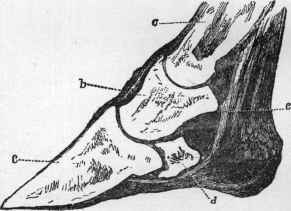 Fig. 91 represents the phalangeal bones in their naturally oblique position.
The upper part of the long pastern bone (a), to toe of os pedis (c), is a
continuously oblique line. This obliquity of position enables the bone
to act as a spring, modifying concussion and giving elasticity of step and
freedom from jar. The coronary bone (b) rests entirely on the os pedis.
The navicular bone (d), placed posteriorly, bears no weight, but gives
increased leverage power to the tendon (e). This bone, like the sesa-
moids, is a muscular appendage, and is not intended to support weight.
Compare with Fig. 92 on opposite page.
| 